
More Looking Forward, Less Looking For

Someone to love, something to do, and something to look forward to. I’m not sure who should be credited with those words originally, but I give Patrick credit for bringing them to me. It describes key components of a happy life.
Recently, I’ve been thinking a lot about the “something to look forward to” part. I have a lot to look forward to these days, and I think that has a lot to do with my current sense of happiness and contentment.
These 114 tomato plants, which I’ve shared a fair amount about on social media, have given me plenty to look forward to. I’m excited for homegrown tomatoes this summer, for slices, salsas, and sauces, but maybe even more than that, they’ve given me something to anticipate each day. We’ve had small gardens over the years, but this is the first time we’ve started from seed, and there’s something about watching those plants pull themselves up that feels especially satisfying.
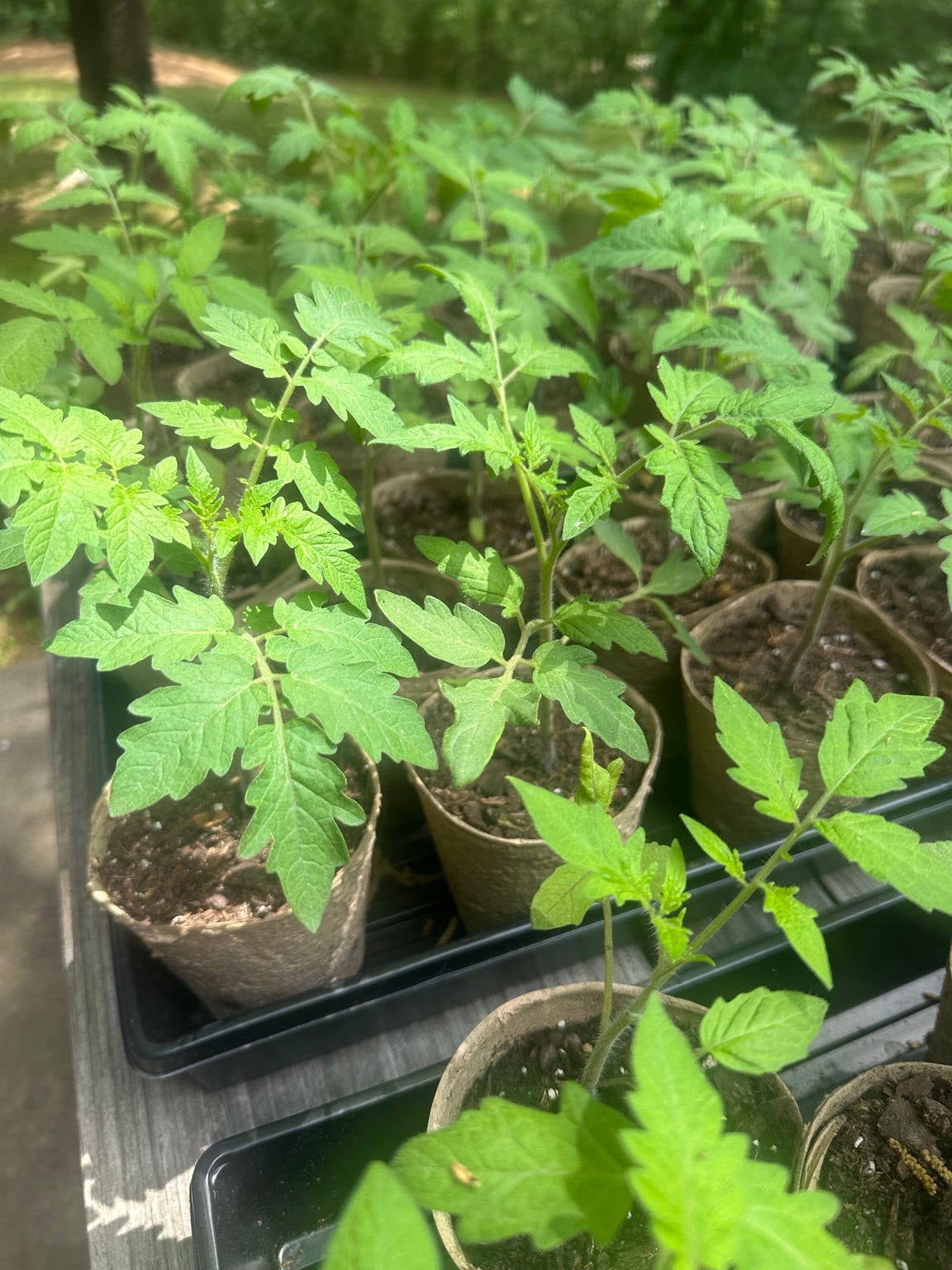
It’s the small things, the everyday things, that seem to bring me the most happiness. When I was younger, I was always looking forward to the weekend or the next big thing, but these days I find myself looking forward to a lot of little things. I do hope retirement comes with health and time to spend with the people I love and the activities I enjoy, but if I live only for retirement or the weekend, I’ll miss a lot of living.
A cold snap this weekend, with lows in the 40s, meant it was not yet time to plant. So Saturday became a good day for me, Patrick, and the plants to stay inside. The plants stayed under the lights, which we call the VICU, the vegetable intensive care unit. Patrick and I used the day to organize the garage, which was long overdue.
Today the tomato plants happily headed out to soak up some sun in the 70 degree warmth. Our backyard is too shady, so we built the garden in the front yard, three beds in all. The largest will hold tomatoes only, twenty something plants, give or take. I’ve also worked out a few additional planting options that should get me closer to thirty, which is a bold move for someone with no canning experience.
To make the front yard garden a bit prettier, and hopefully to minimize pests, I planted flowers around the perimeter. Leslie started some in pots after I gave her seeds for Valentine’s Day. She is out of the country for a couple of weeks and told me to go ahead and move them into my garden, which I happily did, spacing them along the edges and planting additional seeds in between. If all goes well, the pollinators will love it, and we want them to.
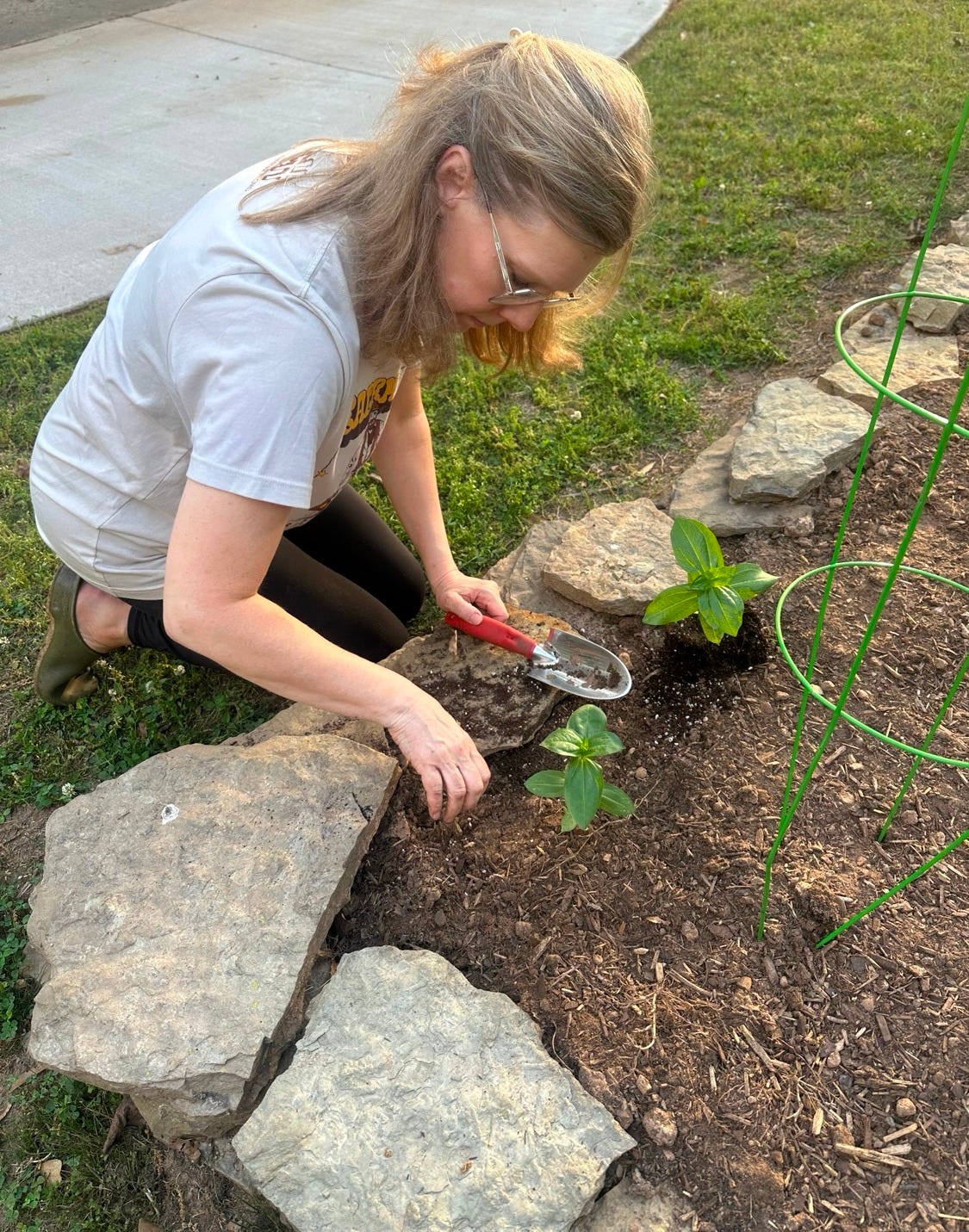
Bees are fascinating and necessary in ways I am just beginning to understand. Leslie, Patrick, and I have been talking about building bee houses for several months. Last night, during a Saturday evening drive, I spotted dead bamboo along the roadside, jumped out of the truck, and gathered an armful. Patrick was a bit concerned about me trespassing on private property. I could not imagine anyone objecting to us taking what was headed for decay. I wasn’t exactly sure what we were looking for, so I grabbed a variety of sizes, but it turns out the smaller pieces are best since many native bees prefer narrow tunnels. This morning we went back for more. Patrick stayed in the truck, and I’m fairly certain he would have driven off without me if the landowner had showed up.
Not all bees live in hives. Some live alone, no queen, no hierarchy, just a small, well-sized tunnel to call their own. That is certainly the bee life, and work life, I would choose. They do not make honey, which is fine with me because I don’t even like honey, but what they do make is an impact. Though fewer in number, many solitary bees are actually more efficient pollinators than honeybees.
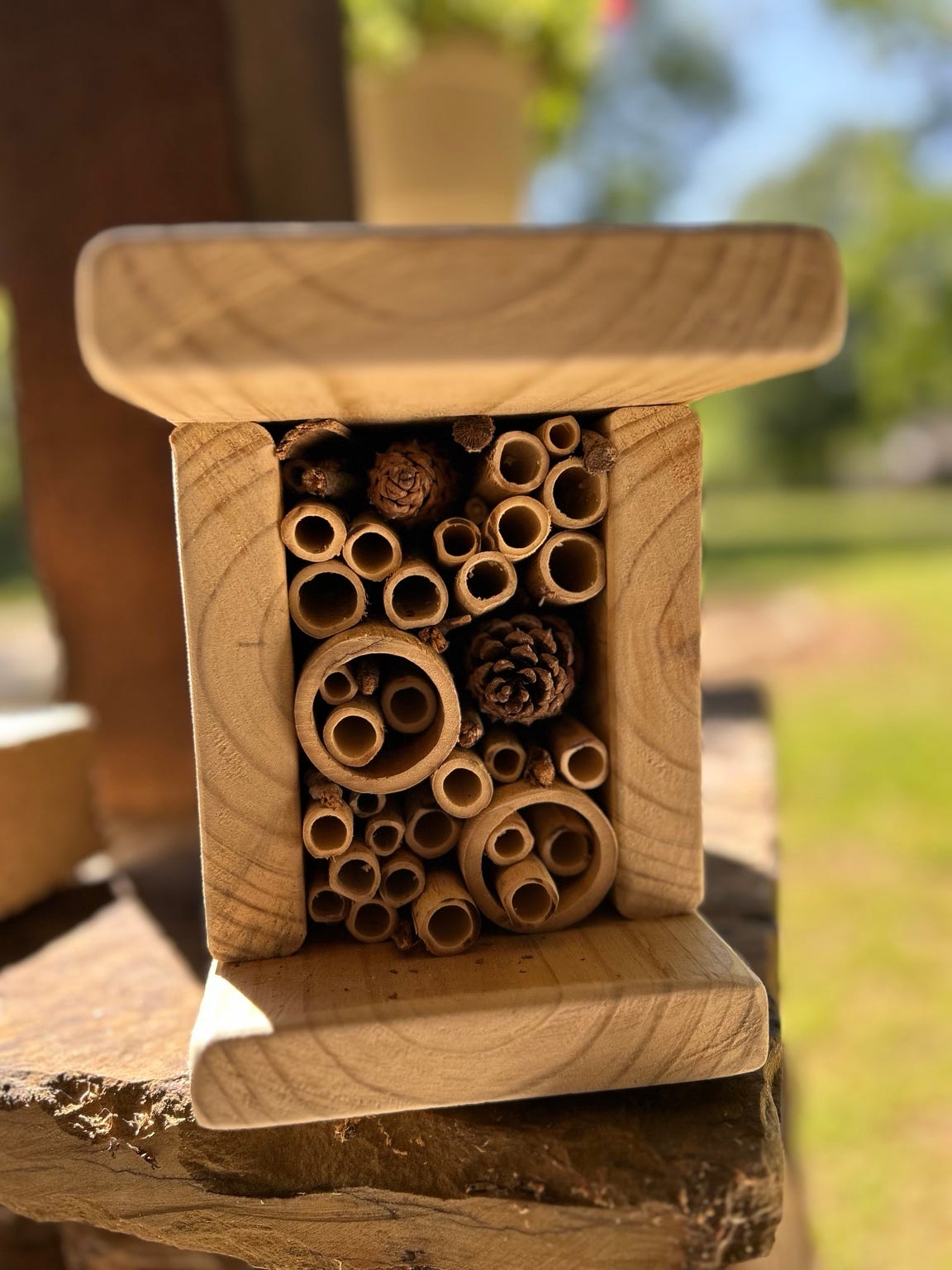
With bamboo in hand and a beautiful day, it felt like the right time to build our first bee house. We cut the bamboo into seven inch sections, leaving one end closed. We built a simple structure to hold about thirty tubes, then tucked in pinecones and sticks to fill the gaps and keep everything snug.
It helped that we cleaned the garage yesterday. That project was long overdue. We still call it a garage, but it’s now a den and my crafting and sewing space. It’s also where everything without a proper home tends to land. The closet holds bins of holiday decorations, photographs, DVDs, children’s artwork, and baby clothes. The stuff of my nightmares. Every January, I resolve to do something about those bins, and every year they lose out to more interesting pursuits like gardening, writing, sewing, and just about anything else. So they remain.
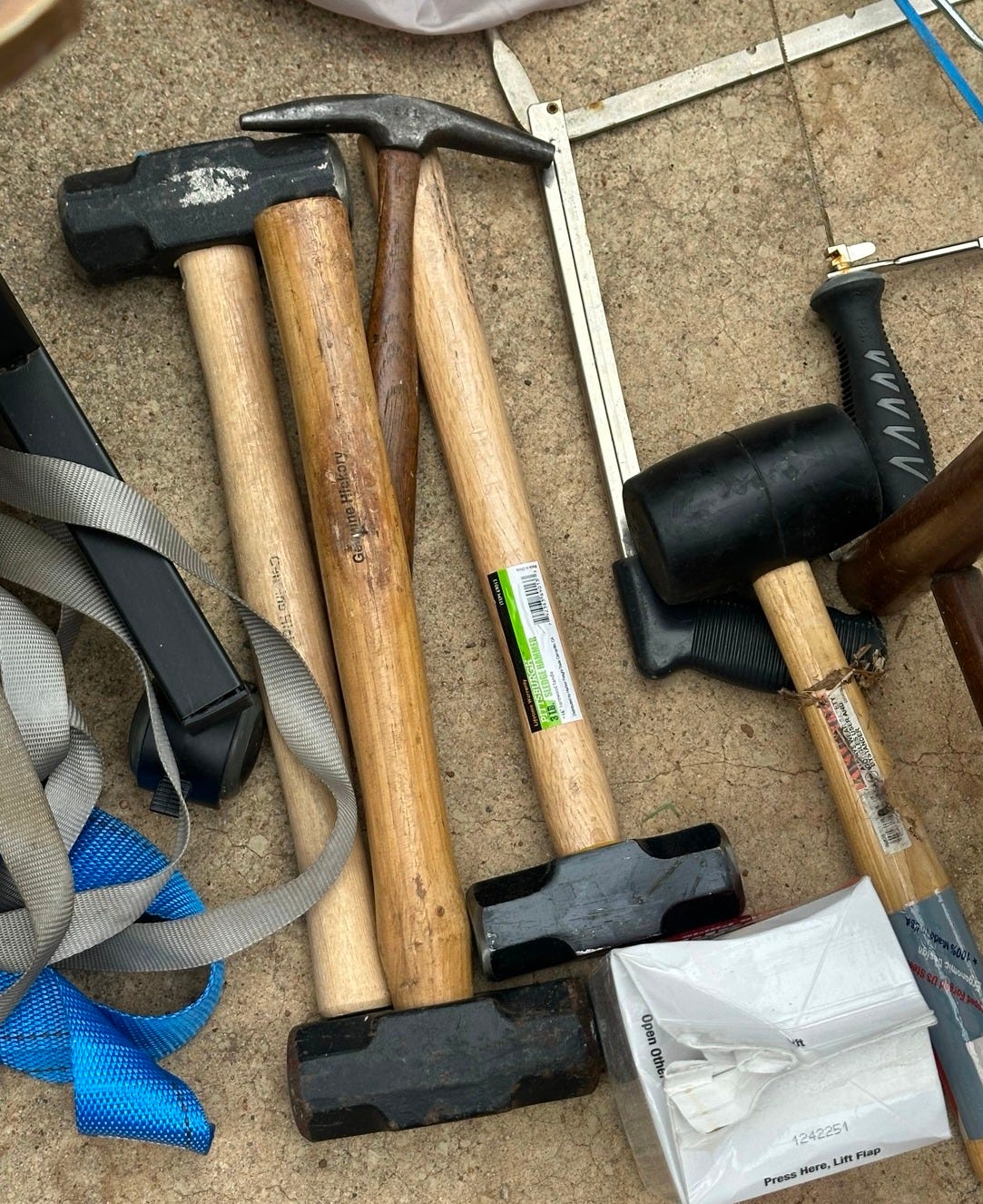
But yesterday we made progress, and now for the first time in a long time I know exactly where the hand saw is. There is something deeply gratifying about being able to find the tool you need without frustration. In the past we have been known to simply buy another tool rather than dig through that closet, which explains the pile of sledgehammers we uncovered.
I have to believe I have spent more time than the average person looking for things, and I am ready to pull that average way down. Looking for stuff drains my energy faster than anything.
Fed up with looking for my phone while moving between the house, yard, and garage, I made a purchase this week that I fully recommend, a belt bag. It holds exactly one thing, my phone. No more wandering from room to room, no more retracing steps. It is not the least bit stylish, but I don’t care. I don’t have to look for my phone anymore.
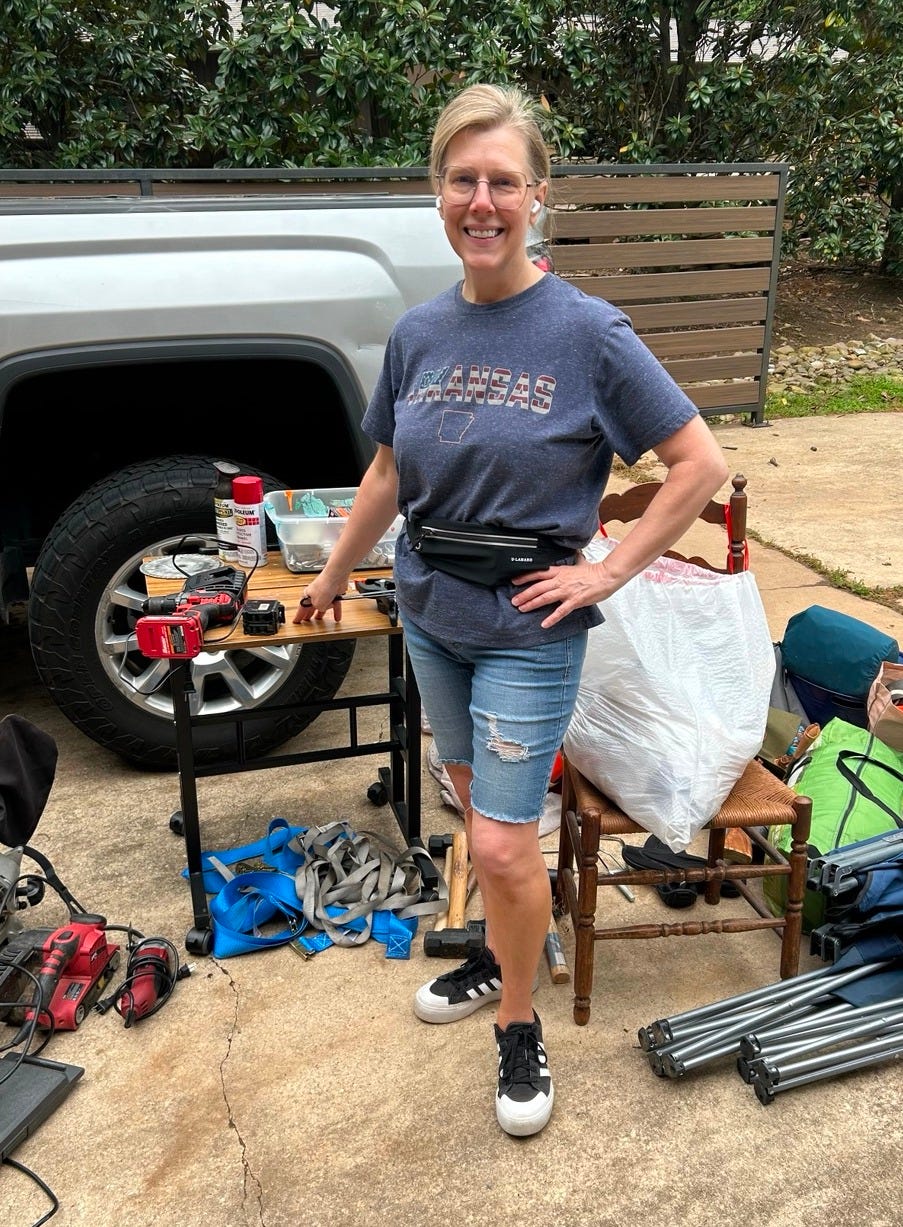
We ended up not using the hand saw after all, but pulled out the chop saw for the bee houses instead, which made cleaner cuts and sped things up. It was an easy project, and the first house has been hung, ready for its first occupants. We’ll make a few more for our yard and for Leslie’s when she returns from her trip.


Patrick and I walked the gardens several times today (okay, a lot of times today) just to see if there was anything to see. Some of the flower seeds I planted have already popped up. I counted five last night and seven this morning. Patrick planted the corn on Monday night and counted eighteen brave stalks pushing through the soil this afternoon. He used six small mounds. Once the corn reaches about six inches tall, beans will go around it and squash at the base. The beans climb the corn and the squash spreads along the ground. It’s called the three sisters method, something he picked up in his reading on Native American history.


This week I’m looking forward to evenings on the porch, more flower sprouts pushing through the soil, choosing which tomatoes go in the ground, planting them, and seeing if bees find their new home.
I won’t be looking for my phone or my tools this week. I’ll just be looking forward.
Wishing you plenty to look forward to,
Martha
I’ll leave you with a poem that reminds us that paying attention is its own kind of prayer, and ends with a question worth considering.
The Summer Day
By Mary Oliver
Who made the world?
Who made the swan, and the black bear?
Who made the grasshopper?
This grasshopper, I mean—
the one who has flung herself out of the grass,
the one who is eating sugar out of my hand,
who is moving her jaws back and forth instead of up and down—
who is gazing around with her enormous and complicated eyes.
Now she lifts her pale forearms and thoroughly washes her face.
Now she snaps her wings open, and floats away.
I don’t know exactly what a prayer is.
I do know how to pay attention, how to fall down
into the grass, how to kneel down in the grass,
how to be idle and blessed, how to stroll through the fields,
which is what I have been doing all day.
Tell me, what else should I have done?
Doesn’t everything die at last, and too soon?
Tell me, what is it you plan to do
with your one wild and precious life?
Really enjoyed this read.